EN
EN  ES
ES 

Father Henry Zayamoe, OMI: A Journey of Joy, Resilience, and Mission
The vocation of Father Henry Zayamoe, OMI was rooted in resilience, shaped by migration, and animated by joy. Born in Burma, now known as Myanmar, Father Henry’s name reflected his cultural heritage. “Zeya” meant success, and “Mo” meant rain—a blessing from heaven. His early years were marked by political unrest, prompting his family to flee to Thailand in 2008. There, in a refugee camp of 40,000 people, he began to discover his call to serve.
Seeds of Vocation in the Refugee Camp
In Thailand, Henry became a teacher—first informally, then officially—learning new languages to reach his students. He eventually spoke five: his native Karen, Burmese, camp dialect Karen, English, and Spanish. Amid the hardship of camp life, he was entrusted with a small ministry: visiting the sick and consoling grieving families with donations collected by the chapel. “That kind of ministry stayed with me,” he recalled. “I was really proud of that.”
A New Beginning in Buffalo
In 2013, Henry’s family resettled in Buffalo, New York through a family reunification program. There, he encountered the Missionary Oblates of Mary Immaculate for the first time, without yet knowing their name. He earned his GED, studied architectural technology, and served as a youth leader, helping other refugees navigate their new lives. His heart for accompaniment deepened.
A Whispered Call
At a youth retreat in Indiana, Henry experienced a profound moment of discernment. During silent meditation before the Blessed Sacrament, he heard a whisper, though no one was near. Later that day, a newly ordained priest shared his joy. “I want to be like him,” Henry thought. That evening, he felt warmth in his heart and clarity in his soul. “Maybe in the morning, God was speaking to me.”
Discovering the Oblate Charism
Back in Buffalo, Henry told his pastor, “I think I want to be a priest.” He was introduced to the Oblates and invited to discern in San Antonio. There, he learned about St. Eugene de Mazenod, the Oblate charism, and the missionary call to serve the poor and most abandoned. “It came full circle,” he said, recalling the Italian missionaries who once evangelized his homeland and created a written script for his language. “I always admired missionaries. Now I knew—I wanted to be one.”
Formation and First Profession
In 2016, Henry entered formation with the Oblates studying philosophy and living community life in the in Buffalo, NY pre-novitiate house. In 2020, Bro. Henry professed his first vows as a Missionary Oblate after completing the novitiate year in Godfrey, Illinois with brothers from around the world. “We were very diverse,” he said. “It affirmed for me—we are missionaries, serving people across every continent.” After novitiate, Bro. Henry continued on to theological studies at Oblate School of Theology in San Antonio.
Ministry in Action
Bro. Henry’s pastoral internship in New Orleans with Father Tony Rigoli, OMI deepened his understanding of the Oblate mission. “He has the heart of St. Eugene,” Bro. Henry said, “caring for the poor, the homeless, and those with mental illness.” He also completed Clinical Pastoral Education at Christus Spohn Hospital, where he learned to listen with compassion and navigate the emotional intensity of hospital chaplaincy ministry. “Listening is the best we can do,” he reflected. “To speak heart to heart, we must learn the language people speak.”
A Global Heart, A Local Mission
Bro. Henry’s journey took him from Myanmar to Thailand, Buffalo, Godfrey to San Antonio, New Orleans to Tijuana. Each place shaped his understanding of culture, language, and mission. “People want to share their lives,” he said. “To be close to them, we must sit with them, eat with them, and walk with them in joy and sorrow.”
Ordination and Perpetual Vows
In November 2025, Father Henry was ordained to the priesthood—a moment he approached not with nervousness, but with deep peace. “I did not feel anxious,” he said. “I felt like I was living my calling.” While certain responsibilities shifted, such as offering the sacrament of reconciliation and providing deeper spiritual comfort, he saw these changes as natural extensions of the ministry he had already embraced. His ordination marked a public and personal yes to the vows of poverty, chastity, and obedience, lived in communion with the Oblate family and the Church. “This was a step in my calling,” he said simply. “And I was ready.”
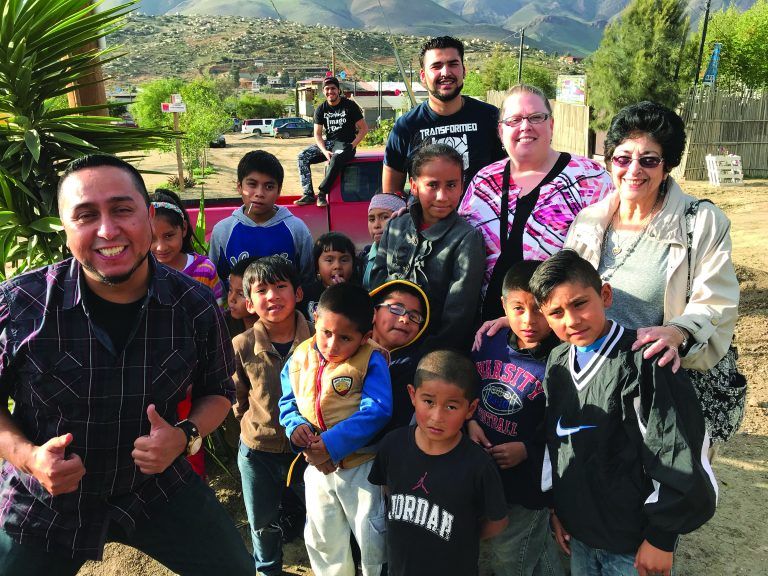
Now serving in Tijuana, Mexico, Father Henry continues to minister alongside Father Bill Antone, OMI learning from seasoned missionaries and offering pastoral care in Spanish. His journey—from refugee camp to hospital bedside, from youth ministry to mission—embodies the heart of Oblate spirituality: to see God in the poor, to serve with compassion, and to live joyfully in mission.