EN
EN  ES
ES 

A Light That Never Went Out: Father Mulenga, OMI and the Living History of St. Augustine
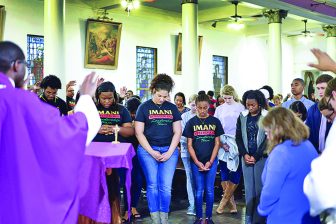
St. Augustine Catholic Church rises quietly from the center of Treme, a neighborhood shaped by centuries of change in New Orleans, LA. Long before the streets filled with homes and music, the land was a plantation owned by Claude Treme. Father Emmanuel Mulenga, OMI, explained that in those early years, the entire area was plantation land. Claude Treme began to divide and sell portions of it, and the Ursuline Sisters purchased one of those parcels. They gave it to the diocese with one clear condition. A Catholic church must be built to serve everyone in the community, including those who were enslaved and those who were free.
That promise became the foundation of St. Augustine. From the moment its doors opened in 1841, the parish became a visible sign of Catholic faith and a place where people gathered not only to worship, but to belong.
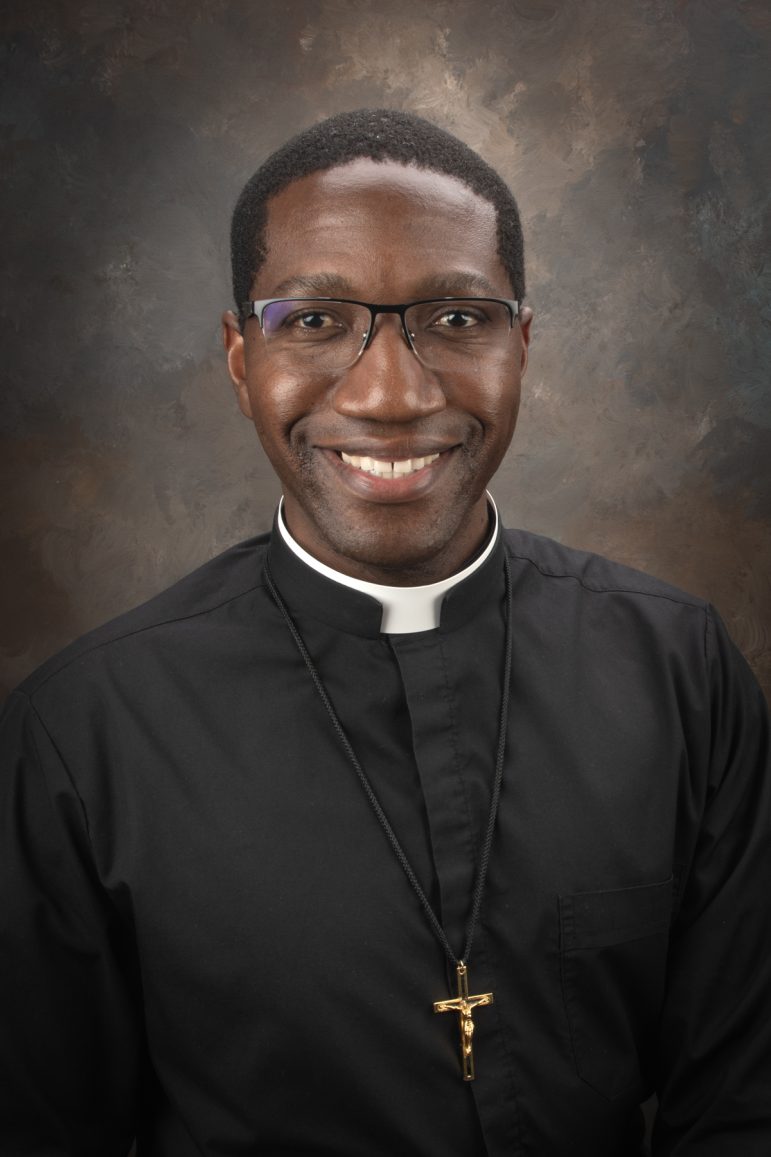
Father Emmanuel’s own journey began far from New Orleans. He grew up in Lusaka, Zambia, where his home parish stood near an Oblate formation house. He remembers the Oblate brothers who came to his parish on weekends, the games of volleyball and soccer, and the sense of welcome that surrounded their visits. He remembers walking into the formation house and feeling something stir inside him, even though he did not yet understand it.
He worked for a civic education campaign after high school, then in a marketing firm. Yet the sense of calling remained. He described it simply. There is a fire here that will not go away. In 2003, he left his job and entered Oblate life.
After three years in Oblate formation in Lusaka, it took him to Godfrey, Illinois for novitiate, then to San Antonio for theology. He was ordained an Oblate priest in 2012. After serving in the western region of Zambia, he was reassigned to the United States Province in 2014. New Orleans became his first American assignment. He arrived without knowing that the parish he had once studied in a classroom would become the center of his ministry.
A Parish Rooted in Catholic Mission
Saint Augustine Parish stands at the heart of Treme with a presence that feels both steady and welcoming. Families have walked through its doors for generations. The church has been a place where baptisms, funerals, feast days, and ordinary Sundays have shaped the rhythm of life. It has been a Catholic anchor for the neighborhood, a place where faith is expressed through liturgy, through community, and through the simple act of showing up for one another.
The parish welcomes Catholics from many walks of life. Religious sisters pray there. Local families find a spiritual home there. Visitors who arrive in New Orleans seeking community discover a place where they are greeted warmly and invited to stay. The parish also holds a place in the cultural life of the city. The annual Satchmo Festival begins with Mass at St. Augustine. Musicians gather in the pews with their instruments resting beside them. After Mass, a second line moves through the neighborhood, carrying the joy of the celebration into the streets.
On the grounds stands the Tomb of the Unknown Slave, created in 2004 from heavy ship chains. It acknowledges the suffering that once took place on the land and honors lives that were never recorded. It is a reminder that the parish mission has always included healing, remembrance, and the dignity of every person.
Storms, Silence, and the Work of Healing
New Orleans is familiar with hurricanes. In 2005, Katrina spared St. Augustine major damage, but the years that followed brought a steady stream of named storms. In 2021, Hurricane Ida struck with force. The church suffered significant wind damage. This occurred one week after repairs from Hurricane Zeta had finally been approved. Father Emmanuel said, “a week before Hurricane Ida everything was concluded. And then Hurricane Ida came in.”
With major roof damage to the church, everything moved to its social hall. The hall is smaller and quieter, but it became a sanctuary. People arrived carrying exhaustion, worry, and the weight of uncertainty. They sat together in folding chairs. They prayed. They listened. They hugged one another without speaking. Father Emmanuel said, “sometimes people just sat in silence, give each other a hug, and say it is going to be okay.”
The hall became a place where stories were shared. Some parishioners had lost parts of their homes. Others had lost all of them. Some had spent nights without power. Some had spent days without knowing where loved ones had gone. The parish became a place where people could breathe again.
Father Emmanuel felt the strain as well. He said, “you are trying to keep a sense of hope in yourself as pastor, but also share that and help sustain it in others.”
The Return Home
Five years after Hurricane Ida, the church was finally ready.
The announcement came at the end of Mass. Father Emmanuel told the community that they could return to the church. The reaction was immediate. “Somebody said, can we start moving our stuff right now? People laughed. People cried. People began carrying instruments, chairs, and equipment across the courtyard. The movement felt like a procession. It felt like a homecoming.”
When they stepped back into the sanctuary, the air felt different. The light through the windows seemed brighter. The familiar scent of old wood and incense returned. Father Emmanuel stood at the front and said only, “We are back!” The words were simple, but they carried the weight of five years of waiting.
He said, “It was a beautiful thing to experience the coming together of the people and the sustaining of each other in faith.”
A Pastor Anchored by His People
Father Emmanuel is often seen as the anchor of hope for the parish. He insists that the community anchors him as well. Parishioners check on him. They hug him. They ask sincerely, “How are you doing, Father?” He receives strength from their care. He said, “I find that I also get that from the people I serve.”
He leans on prayer, silence, humor, and the Oblate community. He finds comfort in small routines. Reruns of The Golden Girls and Everybody Loves Raymond give him a moment of normalcy. “Those little things give me a little touch into what is going on.”
Through it all, one phrase became a parish mantra. On Gods time. When repairs dragged, when hope thinned, when exhaustion set in, someone would say it. And someone else would answer. Who is in charge.
A Living Legacy
Saint Augustine is more than a church. It is a monument to resilience. It is a testament to Catholic faith lived across generations. It is a gathering place for healing. It is a beacon of hope in a city shaped by storms.
Father Emmanuel’s story is now part of that legacy. He arrived in New Orleans and became not only a pastor, but a preservationist, a companion, and a witness to the quiet strength of a community that refuses to let its light go out.