EN
EN  ES
ES 

Choosing Humanity in the Age of Artificial Intelligence
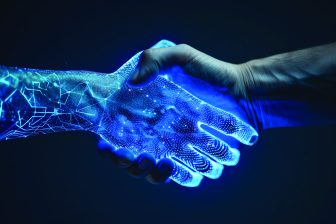
Artificial intelligence is no longer a distant concept reserved for laboratories and tech companies. It is shaping daily life in ways that most people never see but constantly feel. It influences what we read, how we work, how we communicate, and even how we understand ourselves. In the middle of this transformation, Pope Leo XIV has offered a striking and timely message in his first encyclical Magnifica Humanitas. It is a message that speaks not only to Catholics, but to anyone who wonders how humanity can remain whole in a world increasingly shaped by algorithms and codes.
The encyclical begins with a simple truth that carries enormous weight. Technology is never neutral. Every system reflects the values of the people who design it and the institutions that deploy it. This insight matters because many people assume that artificial intelligence is an unstoppable force that will simply reshape society on its own. The encyclical challenges that assumption. It insists that human beings still have agency, and that the choices we make today will determine whether artificial intelligence becomes a tool for human flourishing or a mechanism that deepens inequality and isolation.
One of the most compelling contributions of Magnifica Humanitas is its recognition that the digital revolution has created new forms of vulnerability. These vulnerabilities are not limited to traditional categories of poverty. They include workers who lose jobs to automation, young people who struggle with the pressures of algorithmic attention economies, and global laborers who perform the hidden and often traumatic work of training artificial intelligence systems. They include families who feel overwhelmed by the pace of technological change and communities that see their social fabric stretched thin by digital distraction.
By naming these realities, the encyclical invites readers to see artificial intelligence not only as a technical challenge but as a human one. It asks society to consider who benefits from technological progress and who bears its costs. It asks whether innovation is strengthening relationships or weakening them. It asks whether efficiency has become more important than empathy.
The document also offers a powerful image drawn from the Book of Nehemiah. Nehemiah rebuilt the walls of Jerusalem through collective effort. Every person had a role. Every person contributed to the restoration of the community. This image becomes a guide for the present moment. The future of artificial intelligence will not be shaped by a single leader or a single institution. It will be shaped by the shared responsibility of many people working together.
This shared responsibility applies to everyone. Investors can demand transparency and accountability from corporations. Educators can teach students how to navigate digital environments with wisdom and confidence. Community leaders can create spaces where people reconnect without screens. Families can cultivate habits that protect attention and strengthen relationships. Policymakers can design oversight structures that protect the vulnerable and encourage responsible innovation. Individuals can make conscious choices about how they use technology and how they allow it to influence their lives.
The encyclical does not ask people to reject artificial intelligence. It asks them to engage it with courage and clarity. It asks them to remember that human dignity is not negotiable. It asks them to believe that the digital future can be shaped by compassion, solidarity, and moral imagination.
The age of artificial intelligence is here. The question is whether humanity will remain at the center of it. Magnifica Humanitas offers a vision that is both hopeful and demanding. It reminds us that the future is not something we enter. It is something we build. And if we choose to build it together, with the human person as our guide, then technology can become a force that strengthens rather than diminishes our shared life.
Acknowledgment Statement
This article draws inspiration from two independent reflections. The first is the analysis by Séamus Finn and Susan Francois published in MIT Technology Review on May 29, 2026. The second is the pastoral reflection by Fr. Raymond Cook, OMI, dated May 25, 2026.