EN
EN  ES
ES 

Oblate Priest Reflects on Faith, Dignity, and the Migrant Journey in New Documentary
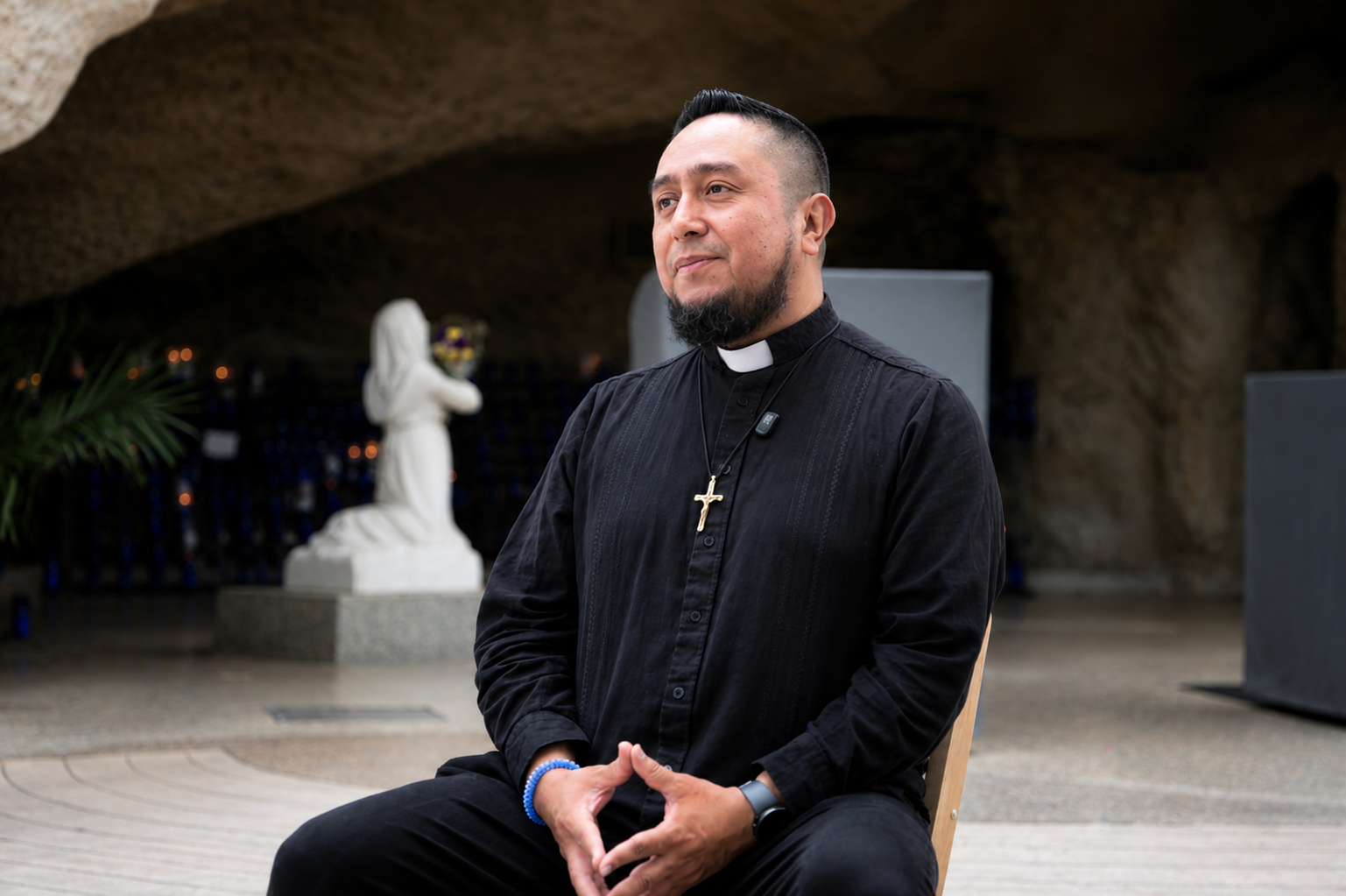
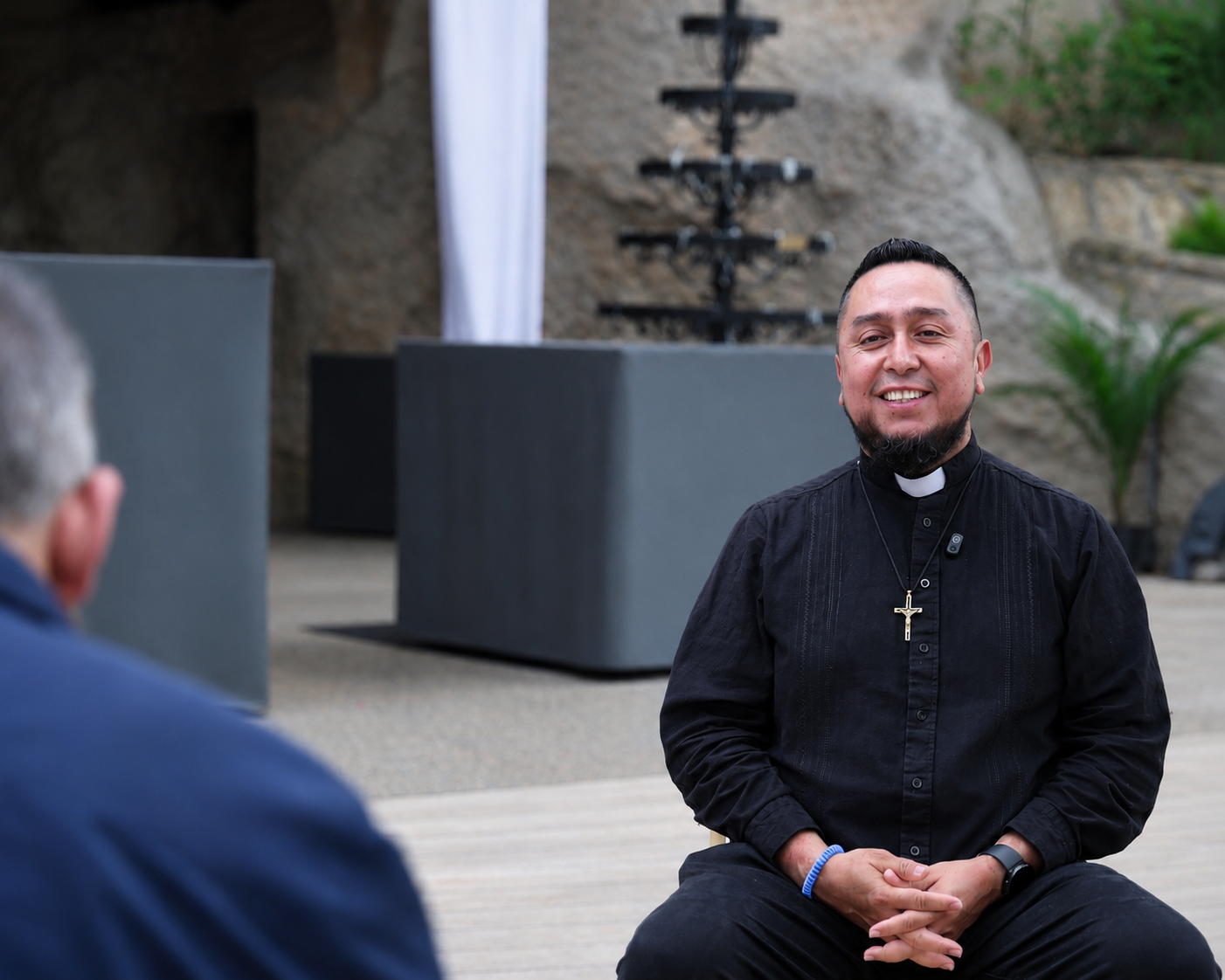
Watch our interview with Fr. Jesse Esqueda, OMI by clicking the link below
A recently-released documentary Exodus Stories: Voices from the Caravan offers a deeply human look at migration, following Central American migrants as they journey north in search of safety, dignity, and a new beginning. The film captures both the physical hardships of the caravan and the emotional realities migrants face along the way—uncertainty, separation from family, and the hope of asylum in the U.S. At its core, the documentary seeks to put faces and personal stories to an issue often discussed only in political terms.
Among the voices that shape this narrative is that of Father Jesse Esqueda, OMI, a Missionary Oblate of Mary Immaculate priest serving in Tijuana, Mexico. His presence in the film provides a spiritual and humanitarian lens through which viewers can better understand not only the migrants’ struggles, but also a community that supports them on the journey.
In an interview, Father Esqueda explains that his ministry is shaped by the charism of St. Eugene de Mazenod. In his writings, St. Eugene de Mazenod writes a particular guiding phrase that is often repeated at the Tijuana mission: first help people become fully human, then Christian, and then saints. For Fr. Esqueda, that begins with access to education, health care, shelter, food, and mental health support, so that people can become healthy and able to give back in service to others.
The documentary crew spent about a month at the center and recorded many hours of footage. Father Esqueda notes that viewers see only about ten minutes of the center in the final cut of the film. The cameras focused on the migrants spending time at the Oblate center participating in prayer, programs, activities and services. At first, Father Esqueda found it difficult to have cameras present during group sessions, legal meetings, and youth events. Over time, he says, the cameras seemed to disappear as the community focused on its work.
Father Esqueda emphasizes that the mission did not stop supporting people when they left the center. Six months after the migrants left Tijuana, Father Esqueda visited Dennis, one of the migrants who appears in the film, at an immigration detention with United States authorities in Adelanto, California. Father Esqueda recounts that when Dennis walked out to see him, he began to cry after so much time away from home and family. Father Esqueda describes the meeting as a very emotional moment for the both of them. Father Esqueda also visited Cindy, another migrant from the documentary, in New Orleans where she was staying with her new husband. As their stories continue, these migrants remain in the prayers of all staff members who shared moments together.
Reflecting on the time when the migrant caravan was present at the center and other moments shown in the film, Father Esqueda says that he has seen glimpses of what he calls the Kingdom of God in action. He speaks of watching people who have faced poverty and violence come to a place where they find love and healing. He says that this is what makes his ministry and vocation very worthwhile, because human beings are created to learn to love as God loves, even though personal opinions and biases can make that difficult.
Father Esqueda hopes viewers of the documentary will be able to put a face to the many migrants they hear about. He believes that seeing their stories and their backgrounds may change the way people look at migration. He refers to the teaching of Pope Leo XIV, who said that migrants must be treated with compassion and reminded Christians that Christ himself was a refugee and a migrant. At the same time, the pontiff notes that countries have the right to establish borders and migration systems, but he insists that these systems must be fair and merciful. He says that Christians are called to help the stranger and to love those who need love, while also acting with mercy even when laws must be followed and people must be responsible.
On a personal level, Father Esqueda says that his ministry in Tijuana has shaped his understanding of faith, justice, and human dignity. Before joining the Oblates, he did missionary work in Honduras, where he experienced life with very limited access to running water. He recalls having water every other day for one hour and filling his sink and bottles so that he could bathe and use water. He describes this as his first encounter with poverty.
When he met the Oblates, he found other men who shared his desire to serve the poor and the most abandoned. Immediately after ordination in 2014, Father Esqueda arrived in Tijuana where the Oblates had already developed a medical/dental clinic and a school for children with special needs. He says that learning from them and building on their work has been a blessing and has made a great difference in his religious life.
Father Esqueda recounts that he joined the Oblates because he wanted to serve the poor and the most abandoned, and this remains at the core of his vocation. He adds that now, even more importantly, he is an Oblate because he wants to fall in love with God and he wants his service to come from an authentic desire to see Christ in others and to love others even when it is difficult. He says he appreciates learning this from older Oblates and from the Tijuana mission. He has also seen what is possible when faith and community come together to help people, including the many young adults the mission serves in Tijuana.
Documentary: Exodus Stories: Voices from the Caravan, released May 29, 2026.
Written by Roger Brooks, MAMI SA
Photos by Aaron Paz, MAMI Marketing