EN
EN  ES
ES 

St. John Paul II: the Missionary Pope and More
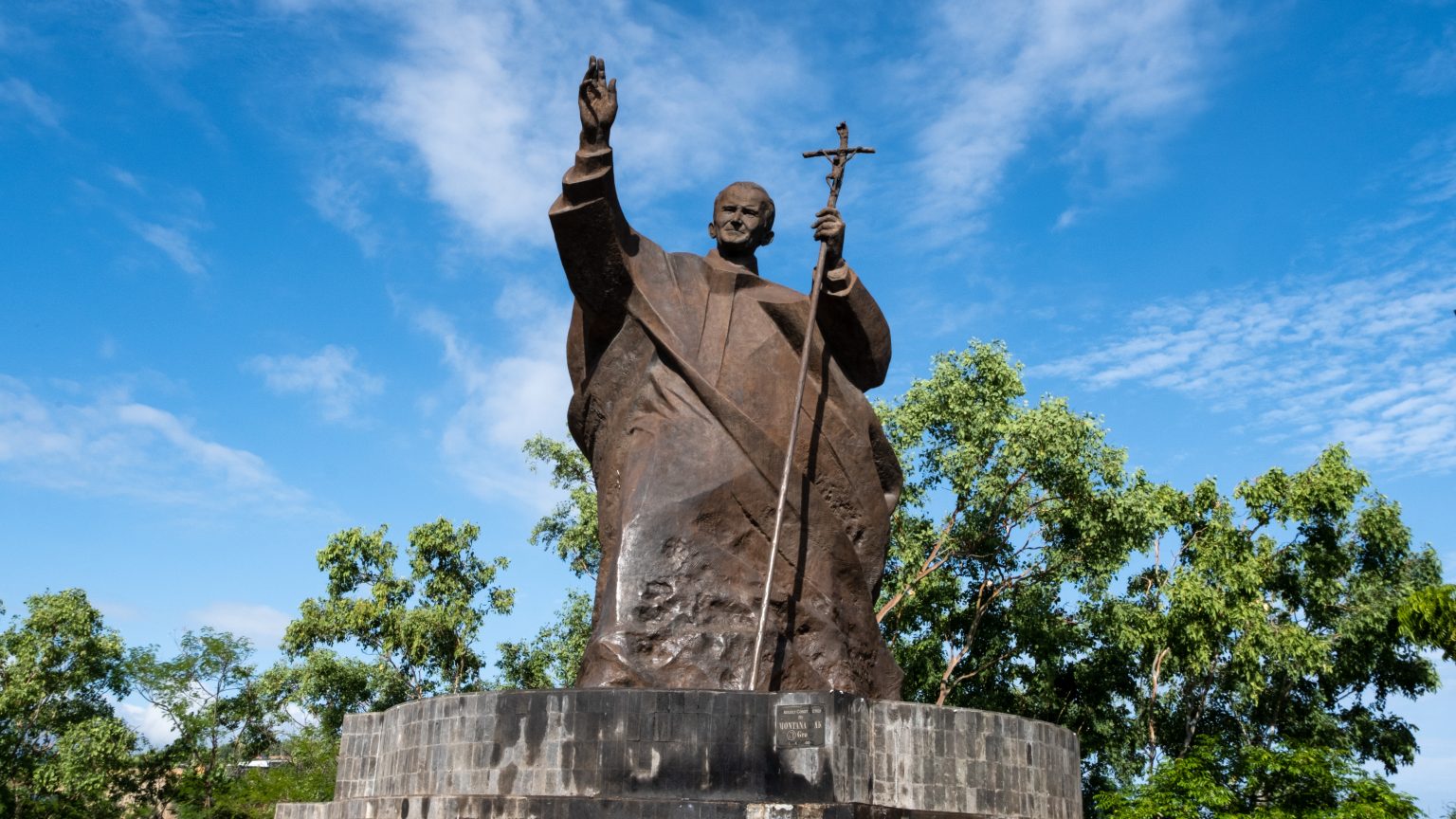
Missionary Pope
Throughout his life and papacy, St. John Paul II held a deeply passionate and theologically grounded view of missionary work. John Paul II was known as the “missionary pope” due to his extensive travels—104 apostolic journeys to 129 countries—bringing the Gospel to people across many continents. He believed direct contact with diverse cultures was essential to understanding and supporting missionary efforts. His visits often included meetings with missionaries, encouragement of local churches, and public affirmations of their work. The Pope encouraged dioceses and religious orders to renew their missionary commitments and supported the Congregation for the Evangelization of Peoples, which oversaw the Church’s global mission efforts.
Pope John Paul II and the Evangelization of the Church
Pope John Paul II articulated this most clearly in his 1990 encyclical Redemptoris Missio (“The Mission of the Redeemer”). In this document, he reaffirmed the permanent validity of the Church’s missionary mandate, emphasizing that evangelization is not just one activity among many, but the very heart of the Church’s identity and mission. He believed that missionary work was a universal responsibility, stating, “No believer in Christ, no institution of the Church can avoid this supreme duty: to proclaim Christ to all peoples.” This conviction was rooted in his understanding of the Church as inherently missionary, a view shaped by the Second Vatican Council’s emphasis on the Church’s Trinitarian foundation. For Pope John Paul II, the missionary impulse was not optional—it was a sign of spiritual vitality. He warned that a decline in missionary zeal was a symptom of a crisis of faith.
St. John Paul II and Oblate Connections
Canonization of Eugene de Mazenod
One of the most significant events for the Missionary Oblates came on December 3, 1995, when Pope John Paul II canonized Eugene de Mazenod, the founder of the Oblates, as saint of the Church. This act not only honored the legacy of the congregation’s founder but also highlighted its enduring role in the Church’s missionary efforts. The Mazenodian spirituality, once just for the Missionary Oblates, now is part of the universal Church.
U.S. Oblate Connections
Pope John Paul II cultivated a profound relationship with the Missionary Oblates. A key figure for him was Marcello Zago, OMI, who served as Superior General of the Oblates from 1986 to 1998. As he was being elected Superior General, Pope John Paul II elevated Zago as bishop, but when Zago explained his new leadership role with the Oblates, the Pope responded, “Since you were called to lead the congregation by your brothers, you must do that instead for the time being.” Their friendship, rooted in a shared love of mission and philosophy, led Zago to contribute to many of JPII’s writings, including the encyclical Redemptoris Missio in 1990. After completing his terms as Superior General in 1998, Zago was elevated to Archbishop and served as Secretary of the Congregation for the Evangelization of Peoples until his death in 2001.
Pope John Paul II actively appointed missionaries to leadership roles, including many from the Missionary Oblates throughout the world. In 1985, Bishop Michael Pfeifer, OMI was appointed to the Diocese of San Angelo, Texas, becoming the first Oblate bishop to lead a U.S. diocese. Pfeifer shared the same birthday with the Pope and recalled a touching moment on John Paul II’s final birthday when the Pope gave him his own pectoral cross—a gift that Pfeifer continues to use in blessings today.
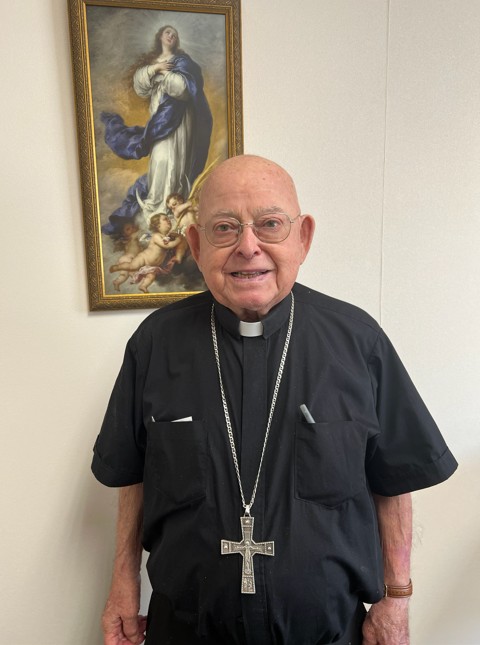
Bishop Michael Pfeifer, OMI
Similarly, Archbishop Roger Schwietz, OMI, was appointed by the Pope to lead dioceses in Duluth, Minnesota (1989) and Anchorage, Alaska (2000), serving faithfully until his retirement in 2016. Schwietz still serves in that Archdiocese today.
Perhaps the most prominent Oblate elevated by Pope John Paul II was Cardinal Francis George, OMI. Appointed to the Diocese of Yakima in 1990, then to Portland in 1996, and finally to his hometown of Chicago in 1997, George was made a cardinal by the Pope in 1998 and later served as President of the U.S. Conference of Catholic Bishops from 2007 to 2010. His leadership and theological/philosophical insights reflected the Pope’s confidence in the Oblates’ mission and spiritual depth. A growing devotion and discussion are occurring in preparation for a formal cause for sainthood by the Archdiocese of Chicago and the Missionary Oblates.
Through these appointments and personal connections, Pope John Paul II demonstrated a lasting respect and admiration for the Missionary Oblates of Mary Immaculate, reinforcing their vital role in the global Church, especially in mission territories.
St. John Paul II, pray for us!